
No products in the cart.
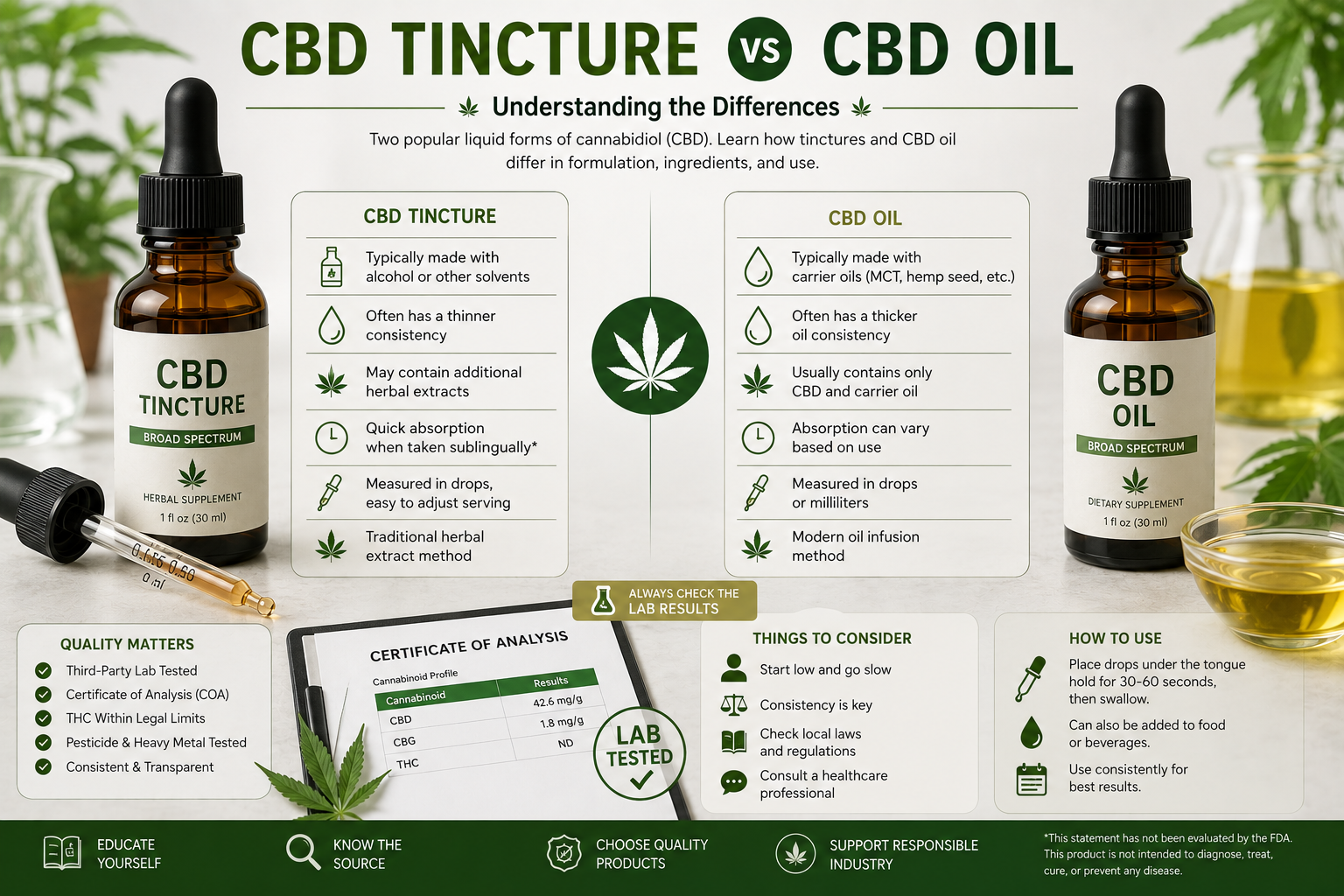
CBD Tincture vs CBD Oil
CBD Tincture vs CBD Oil: Understanding the Differences
CBD Tincture vs CBD Oil, As interest in cannabidiol (CBD) continues to grow globally, many people search for information comparing CBD Tincture vs CBD Oil. While these terms are sometimes used interchangeably, they can refer to different types of formulations depending on the manufacturer, the jurisdiction, and applicable regulations.
This educational guide explains the differences between CBD tinctures and CBD oil, outlines common quality standards used in regulated markets, and discusses the importance of understanding local laws before purchasing, importing, or possessing hemp-derived products.
What Is CBD?
Cannabidiol (CBD) is one of more than one hundred naturally occurring cannabinoids found in the Cannabis sativa plant. Unlike tetrahydrocannabinol (THC), CBD is non-intoxicating and does not produce the psychoactive effects commonly associated with cannabis.
Researchers continue to study CBD and the body’s endocannabinoid system to better understand cannabinoid biology and potential medical applications. Scientific evidence continues to evolve, and readers should rely on qualified healthcare professionals for medical guidance.
What Is a CBD Tincture?
Traditionally, a tincture is a liquid extract prepared using alcohol or another solvent. In some jurisdictions where legally permitted, CBD tinctures may use alcohol-based or other approved extraction and formulation methods.
Modern product labeling varies, and some manufacturers use the term “tincture” for liquid CBD formulations even when they are not alcohol-based.
What Is CBD Oil?
CBD oil is generally a liquid formulation that combines cannabidiol with a carrier oil such as medium-chain triglyceride (MCT) oil or hemp seed oil.
Depending on the country and intended use, CBD oil may be regulated as a medicine, cosmetic, or another consumer product.
CBD Tincture vs CBD Oil: Key Differences
Base Ingredients
CBD tinctures traditionally use an alcohol-based liquid, while CBD oil uses a carrier oil. However, product terminology can vary by manufacturer and jurisdiction.
Formulation
Both products are liquid formulations, but they may differ in ingredients, manufacturing methods, and intended use.
Packaging

CBD tinctures and CBD oil are commonly packaged in bottles with droppers to assist with measuring. Packaging varies by manufacturer and regulatory requirements.
Manufacturing
Both product types require quality-controlled manufacturing processes to improve consistency and product quality.
Product Quality Standards
In regulated markets, manufacturers commonly demonstrate quality through:
- Independent third-party laboratory testing
- Certificates of Analysis (COAs)
- Good Manufacturing Practice (GMP) compliance
- Transparent ingredient labeling
- Batch-specific quality reports
- Manufacturing traceability
These quality measures help improve transparency and provide information about product composition.
Why Laboratory Testing Matters
Independent laboratory testing may evaluate:
- Cannabinoid profile
- THC concentration
- Heavy metals
- Pesticide residues
- Residual solvents
- Microbiological contaminants
Certificates of Analysis provide documentation of laboratory findings for individual production batches and help verify manufacturing consistency.
Understanding Product Labels
Consumers reviewing CBD product labels may encounter information such as:
- Total CBD content
- Ingredient list
- Batch number
- Manufacturing date
- Laboratory testing reference
- Storage recommendations
Accurate labeling supports transparency and informed decision-making.
Scientific Research
Researchers continue investigating cannabinoids in areas including:
- Endocannabinoid system biology
- Cannabinoid chemistry
- Plant genetics
- Agricultural science
- Pharmaceutical development
- Analytical laboratory testing
Scientific understanding continues to evolve through laboratory and clinical research.
Legal Considerations
The legal status of CBD tinctures and CBD oil differs significantly between countries.
Depending on national regulations, these products may be classified as:
- Medicines
- Cosmetics
- Foods
- Consumer products
- Controlled substances
Travelers should not assume that products legal in one country are permitted in another. Always consult official government guidance before purchasing, importing, or carrying hemp-derived products across international borders.
Frequently Asked Questions
Are CBD tinctures and CBD oil the same?
Not always. Although the terms are sometimes used interchangeably, traditional tinctures and CBD oils may differ in their formulation and ingredients.
What is a Certificate of Analysis?
A Certificate of Analysis (COA) is an independent laboratory report that may verify cannabinoid content and provide information about contaminant testing and product quality.
Why is laboratory testing important?
Laboratory testing helps verify product composition, manufacturing consistency, and contaminant screening in jurisdictions where CBD products are legally regulated.
Are CBD products regulated the same everywhere?
No. Laws differ substantially between countries, and product classifications depend on local regulations.
Conclusion
Understanding CBD Tincture vs CBD Oil starts with recognizing that terminology, formulation, and regulation can vary. Both product types are liquid formulations, but they may differ in ingredients, manufacturing methods, and legal classification. Quality assurance practices such as third-party laboratory testing, Certificates of Analysis, and transparent labeling are important features in regulated markets.