
No products in the cart.

Description
The History and Traditions of Moroccan Hashish Production
Moroccan Hash stands as one of the world’s most famous epicenters of traditional resin extraction. For centuries, the rugged, high-altitude terrain of the Rif Mountains in northern Morocco—particularly around regions like Ketama and Chefchaouen—has hosted a rich agricultural heritage centered on cultivating resilient landrace crops and producing world-renowned concentrates. Understanding the global reputation of this region requires exploring its agricultural origins, traditional dry-sifting techniques, and unique resin characteristics.
The Agricultural Foundation of the Rif Mountains
The hot, dry Mediterranean climate and rocky, mineral-dense soil of the Rif region create ideal conditions for dry-land cannabis farming. Historically, farmers cultivated a traditional native landrace variety known as Kief or Bledia. These compact, drought-resistant plants were specially adapted to mature under intense sunlight with minimal irrigation, producing small but highly concentrated resin glands designed by nature to protect the plant from UV exposure.
In recent decades, local agricultural practices have evolved, with farmers integrating hybrid varieties from Europe alongside traditional crops to increase resin yields and terpene diversity.
The Traditional Dry-Sifting Process
Unlike extraction methods in other regions that rely on hand-rubbing fresh plants, production in the Rif Mountains relies almost entirely on dry-sifting dried plant material over fine screens.
Harvesting & Drying: Whole plants are harvested late in the season when trichomes reach full maturity. They are hung in shaded, dry rooms or left under low heat to dry completely, making the plant material brittle.
Threshing (The Drum Method): Once dry, flowers and leaves are placed inside large plastic tubs covered tightly with fine nylon or silk mesh screens, forming a drum-like apparatus. Farmers beat the top of the fabric with wooden sticks.
Grading the Resin:
First Pass (First Press): The initial, light tapping yields the highest purity of golden trichome dust, containing minimal plant matter.
Second & Third Passes: Subsequent, heavier beatings break down vegetative material, producing lower-grade resin powder containing more chlorophyll and plant fibers.
Pressing, Texture, and Character
Once collected, the loose golden resin powder (kief) is wrapped in linen or plastic and subjected to heat and mechanical pressure.
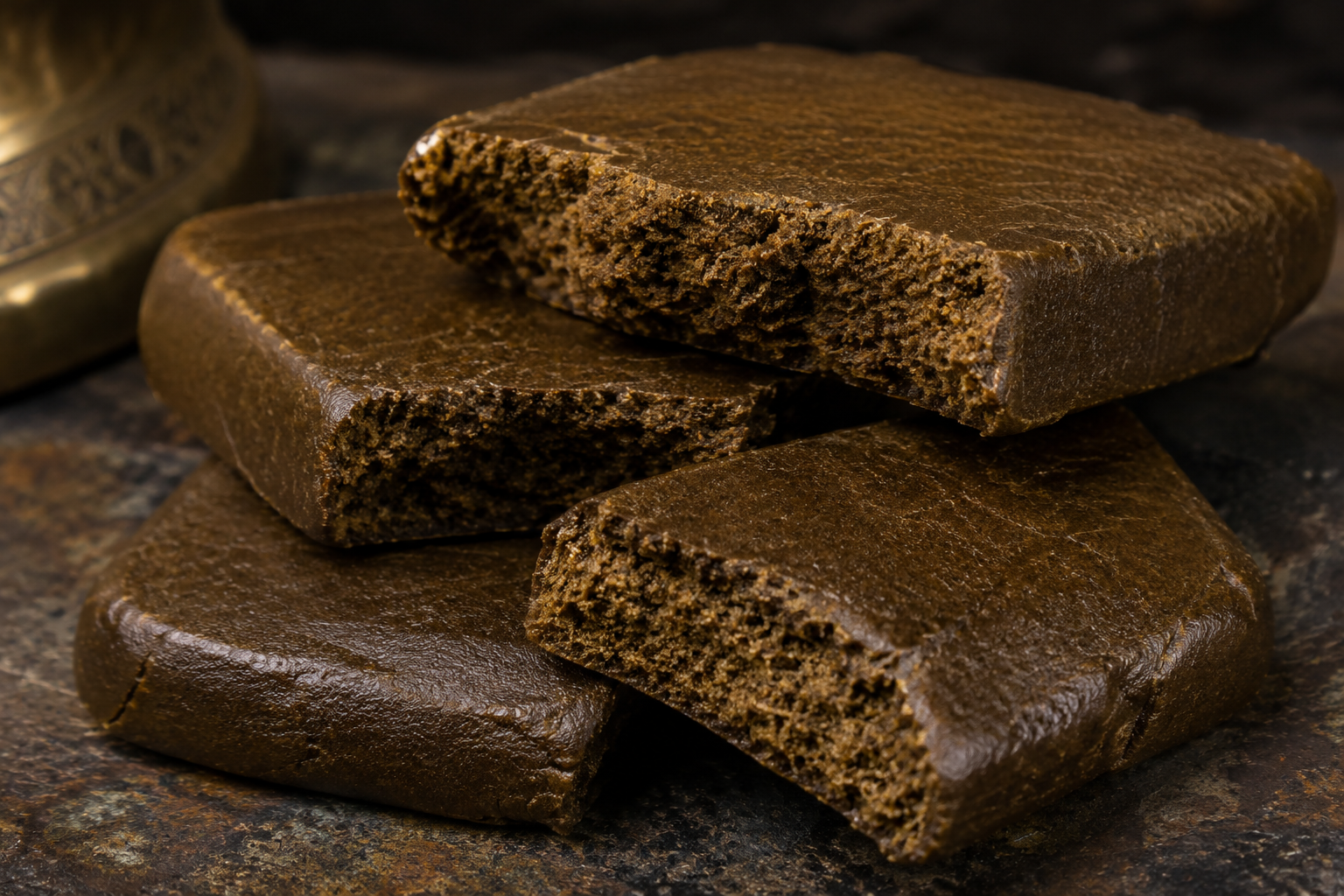
Depending on the quality of the resin and the amount of heat applied, the resulting product ranges from light golden, crumbly bricks to soft, dark, and pliable slabs. Connoisseurs worldwide value authentic hash from morocco for its smooth smoke, uplifting cerebral profile, and distinct flavor profile marked by notes of dry earth, spicy cedar, and subtle floral sweetness.
The traditional techniques developed in this region have made moroccan hash an enduring standard for quality across European and international markets.
Global Popularity and Quality Assessment
When evaluating traditional concentrates from the Rif region, enthusiasts look for several key indicators:
Color & Density: High-grade varieties feature a warm, sandy-gold interior that darkens slightly on the exterior due to light oxidation.
Aroma: A clean, complex fragrance dominated by dry spices, wood, and light herbal undertones without harsh chemical odors.
Burn Test: Pure, well-filtered resin bubbles gently when exposed to low heat, leaving behind light grey ash.
Over the decades, the sheer scale of production and cultural heritage surrounding hash in morocco has cemented the country’s status as an iconic center of traditional artisan extraction.
Legal & Compliance Notice (United Arab Emirates)
While traditional processing methods are studied as a matter of agricultural and cultural history, strict regional laws must be observed regarding controlled botanical substances.
In the United Arab Emirates (UAE), federal laws regarding controlled substances, botanical extracts, and synthetic derivatives are among the strictest globally. All forms of cannabis extracts, hashish, oils, and delta derivatives are strictly prohibited under Federal Decree-Law No. 30 of 2021 on Combatting Narcotics and Psychotropic Substances. Transporting, possessing, purchasing, or distributing these substances within the UAE carries severe legal penalties, including heavy financial fines, mandatory deportation for foreign nationals, and prison terms. Complete adherence to local laws is mandatory for all residents and international visitors in the UAE.
Additional information
| Morrocan Hash | Quart, Half Ounce, Ounce |
|---|
Related products
Buy high quality hash in UAE | Hash Dubai
25G 850,00 د.إBuy quality hash in Oman | fast delivery
25G 850,00 د.إLebanese Hash
Half Oz 915,00 د.إ




Reviews
There are no reviews yet.