
No products in the cart.

Description
The Art and Tradition of Afghan Hashish Production
Afghan Hash holds a deeply rooted history in traditional resin extraction, recognized globally for producing some of the most aromatic, pliable, and distinct cannabis concentrates. For centuries, rural communities in regions such as Balkh, Mazar-i-Sharif, and Kunduz have cultivated specialized landrace crops tailored for resin harvesting. Understanding the traditional techniques behind this historic craft requires exploring the cultivation of specialized genetics, meticulous dry-sifting methods, and hand-pressing practices.
The Genetic Foundation: Landrace Crops
The foundation of traditional production relies entirely on native, sun-drenched landrace genetics. Unlike modern indoor hybrids bred primarily for flower appearance, local Afghan cultivars feature broad leaves, dense flower structures, and exceptionally high trichome coverage designed by nature to withstand harsh mountain environments and arid summers.
Farmers in these regions often preserve and propagate elite genetics using afghan hash plant seeds, ensuring each generation retains the robust terpenes, heavy resin production, and physical resilience necessary for large-scale dry-sifting.
Harvesting and Sun-Drying
The extraction journey begins in the late autumn months, typically around October and November.
Full Maturation: Growers allow the plants to reach full maturity, waiting until the trichomes shift to a deep amber hue.
Drying Phase: Whole plants are harvested and dried in shaded, ventilated rooms or structures for several weeks.
Curing: Once dry, the plant material becomes brittle, allowing the resin heads to detach easily from the plant matter during mechanical separation.
Dry-Sifting: Creating the First-Look Resin (Gardah)
The core extraction process centers on a mechanical separation technique known locally as gardah processing.
Threshing: Dried flowers and leaves are beaten or gently rubbed across fine silk, cloth, or wire mesh screens.
Grading: The loose trichome heads filter through the screens, separating from the vegetative material. The first pass through the finest mesh yields the highest grade of resin dust (first gardah), while subsequent passes yield secondary grades containing slightly more plant matter.
Storage: The collected golden resin dust is gathered and stored in bags or animal skins over the winter months, allowing the compounds to age naturally before final processing.
Hand-Pressing and Curing: Producing Afghan Hash
What distinguishes traditional production from other regional methods is the intensive hand-kneading phase that uses heat, moisture, and pressure.
Rather than using cold hydraulic presses, artisans work with small batches of the aged resin dust using a combination of hand warmth and minimal heat:
Warming: The gardah powder is placed on a warm plate, held over a low flame, or mixed with a few drops of hot water or tea to soften the natural wax membranes surrounding the resin glands.
Kneading: Producers vigorously work and knead the warmed resin by hand or foot for hours until the trichome membranes burst, releasing their internal terpenes and oils.
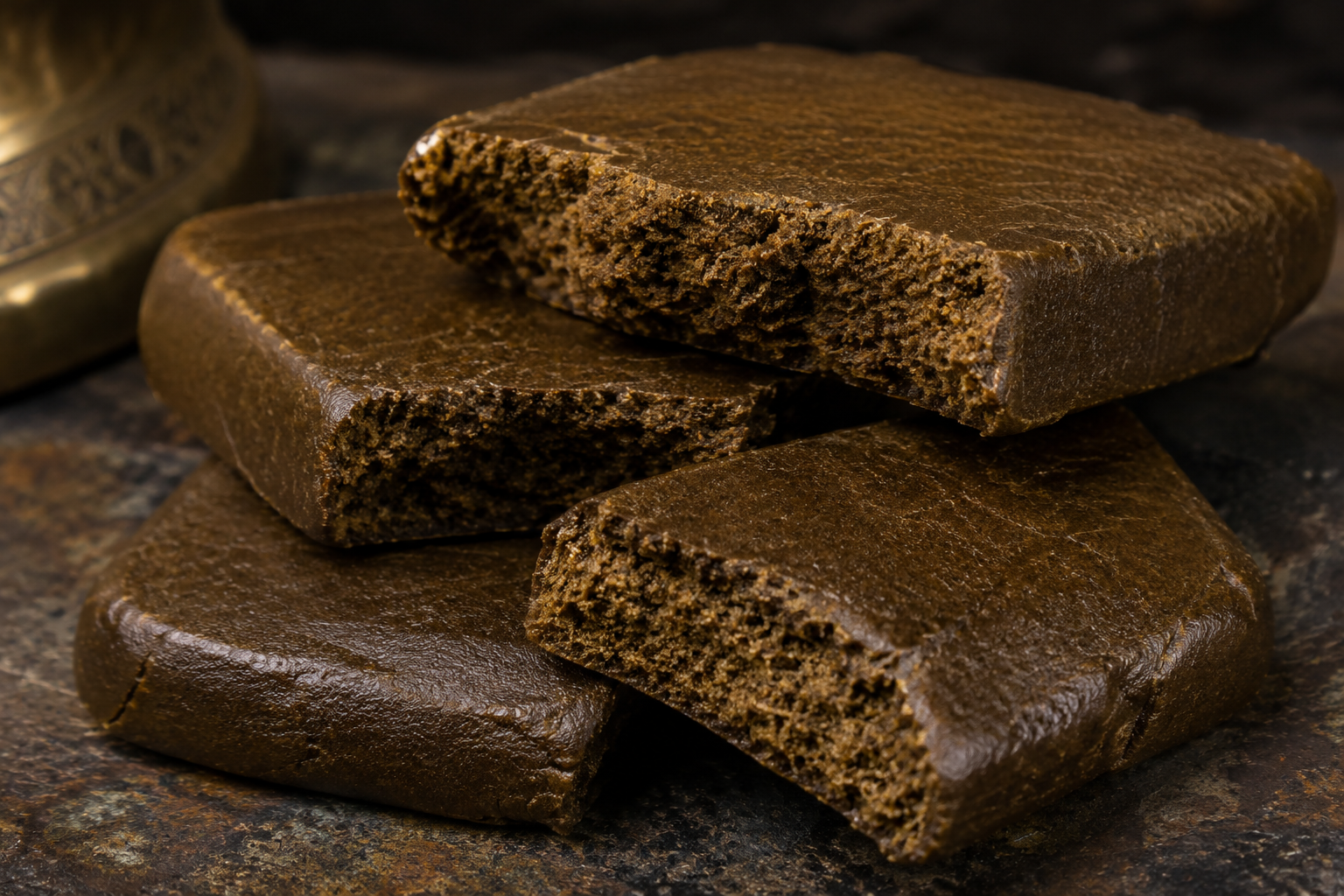
Color Transformation: As the resin oxidizes and the oils bind together, the golden powder turns dark, transforming into the famous, glossy afghan black hash.
Shaping and Stamping: The soft, pliable paste is rolled into dense balls, bricks, or slabs, often finished with a producer’s seal or stamp before being set aside to cure.
The resulting concentrate is celebrated worldwide for its soft, pliable texture, deep spicy-earthy fragrance, and heavy, soothing physical profile.
Global Appreciation and Quality Identification
To identify authentic afghan hash, connoisseurs evaluate three primary characteristics:
Pliability: High-quality batches soften effortlessly with minimal body heat, requiring no open flame to crumble.
Aroma: A complex fragrance dominated by rich earth, cedarwood, dark spices, and subtle sweet floral undertones.
Resin Purity: When exposed to low heat, pure resin bubbles smoothly without leaving heavy charred residues, reflecting the careful hand-sifting and pressing techniques refined across generations of traditional artisans.
Legal & Compliance Disclaimer
This educational overview is provided strictly for cultural, agricultural, and historical information purposes. Cannabis cultivation, extraction, and possession remain subject to strict legal regulations and prohibitions in many jurisdictions worldwide. Always consult and adhere to your local laws regarding controlled plant substances.
Related products
Buy quality hash in Bahrain | Fast delivery
25G 850,00 د.إLebanese Hash
Half Oz 915,00 د.إ


Reviews
There are no reviews yet.